Integrated Territorial Development in Morocco: Prospects and Expectations from the Perspective of Young People

Morocco is currently at a critical juncture in its regional development trajectory, following decades of programs and plans that have yielded some positive results but have also, in part, failed to achieve spatial justice and balanced development across regions. Previous experiences have shown the limited impact of many projects, due to poor coordination among stakeholders, a lack of institutional synergy, and the adoption of a fragmented sectoral approach rather than an integrated regional vision that takes local specificities into account.

In this context, the royal call to formulate a new development model marked a fundamental turning point in Morocco’s approach to development; His Majesty King Mohammed VI, may God assist him, called for moving beyond a narrow sectoral approach toward a comprehensive territorial approach that places citizens and local communities at the heart of public policy.

His Majesty clearly expressed this shift when he said:

“Our goal is to ensure that the benefits of progress and development reach all citizens, in all regions and localities, without discrimination or exclusion… We have directed the government to adopt a new generation of regional development programs, based on promoting local distinctiveness, advancing regional autonomy, and upholding the principles of integration and solidarity among regional areas.”

In the context of his emphasis on fairness among regions and reducing disparities, His Majesty has noted on previous occasions the need to eliminate what he described as a “Morocco of two speeds”; that is, working to eliminate developmental disparities and regional inequalities between regions—whether between regions or even within the same region—so that progress and opportunities are available in a balanced manner to all citizens across the national territory. This directive lends an urgent dimension to the new regional development model and places the fight against inequalities and the consolidation of regional harmony at the forefront of priorities.

This proactive royal directive has laid the groundwork for a new vision of territorial governance, making spatial justice and territorial equity a central pillar of any public policy.

To reinforce this approach, the current finance bill establishes the “Integrated Territorial Development Fund” as a strategic financing mechanism aimed at consolidating public efforts, overcoming the fragmentation of sectoral programs and funds, and ensuring coordination and effectiveness in territorial projects at the regional and local levels.

The new program was not developed in a centralized or top-down manner, but rather through a participatory, grassroots approach, via a series of consultative meetings convened by the Ministry of the Interior that brought together representatives of local communities, governors, mayors, elected officials, local stakeholders, and civil society organizations.

These meetings have led to the development of a realistic local development vision that addresses the specific characteristics of each region and reflects its true priorities.

From the perspective of a young person who shares the concerns and aspirations of this demographic, these changes represent a renewed opportunity to restore trust in public action and to actively engage in the formulation, implementation, and evaluation of local policies. Young people are no longer mere spectators of development policies; rather, they have become key actors, taking the initiative in identifying problems and shortcomings, and partners in change through startups, community initiatives, participation in elected councils, and civic projects with environmental and social dimensions. and the recent youth protests seen on the streets of Morocco are nothing but a confirmation of the dynamism and presence of young people in public life.

However, achieving these ambitious goals requires establishing the principles of good local governance, promoting transparency and accountability, streamlining investment and planning procedures, and accelerating the digital transformation of local administration, Integrated local development is not merely an administrative or institutional slogan, but a practical strategic vision that is implemented on the ground and measured by the extent to which it improves citizens’ quality of life.

Today’s Moroccan youth are looking for a new regional model based on territorial intelligence, active citizenship, and social and territorial justice—a model that uses digitalization and innovation as tools for managing the region effectively and sustainably, and places people at the heart of the development project.

With the launch of the Integrated Territorial Development Fund, hopes are renewed for the creation of a fair and effective territorial vision that lays the groundwork for a Morocco characterized by balanced regions, a sense of solidarity among citizens, and sustainable development that leaves no one behind.

سعد اسريفي
عضو المكتب التنفيذي لمنظمة الشباب/ باحث في قضايا التعمير والتنمية المجالية.
انتقل إلى الأعلى

Composition of the Executive Committee of the PAM Women's Wing

Full Name Adjective The region
Hearts in Pieces President of the PAM Women's Organization My country
Nadia Bazandfa First Deputy My country
Samira Saleh Bannani Second Deputy Tafilalet Shield
Fatima al-Tusi Treasurer My country
Lubna Aknishish First Deputy My country
Ibtisam Harma Second Deputy My country
Dunya and Dgheiri Rapporteur Rabat
Asma Barkita First Deputy Rabat
Lala Islam Badad Second Deputy Rabat

Composition of the Executive Committee of the PAM Women's Wing

Full Name Adjective The region
Hearts in Pieces President of the PAM Women's Organization My country
Nadia Bazandfa First Deputy My country
Samira Saleh Bannani Second Deputy Tafilalet Shield
Fatima al-Tusi Treasurer My country
Lubna Aknishish First Deputy My country
Ibtisam Harma Second Deputy My country
Dunya and Dgheiri Rapporteur Rabat
Asma Barkita First Deputy Rabat
Lala Islam Badad Second Deputy Rabat
August 2008
The Party's Founding and the Election of Mr. Hassan Benadi as Secretary-General
February 20–22, 2009
The Authenticity and Modernity Party held its first national conference under the slogan "Politics with a Different Ethos," and elected Mr. Sheikh Baidallah as Secretary-General
February 17–19, 2012
The Second National Conference was held under the slogan: "Together . . . To Win the Challenges," and Mr. Mustapha Bakouri was elected Secretary-General of the party
January 22–24, 2016:
The Third National Congress was held under the slogan: "Morocco's Regions: Conscious and Responsible Engagement," and Mr. Elias Al-Omari was elected Secretary-General of the party
2018
An extraordinary session of the party’s National Council was held, and Mr. Hakim Benchamach was elected Secretary-General
February 7–9, 2020
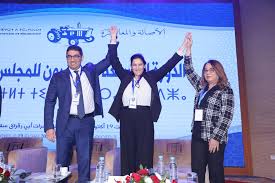
The Fourth National Congress was held under the slogan "Morocco for All," and Mr. Abdellatif Wahbi was elected Secretary-General of the party
May 19–20, 2023
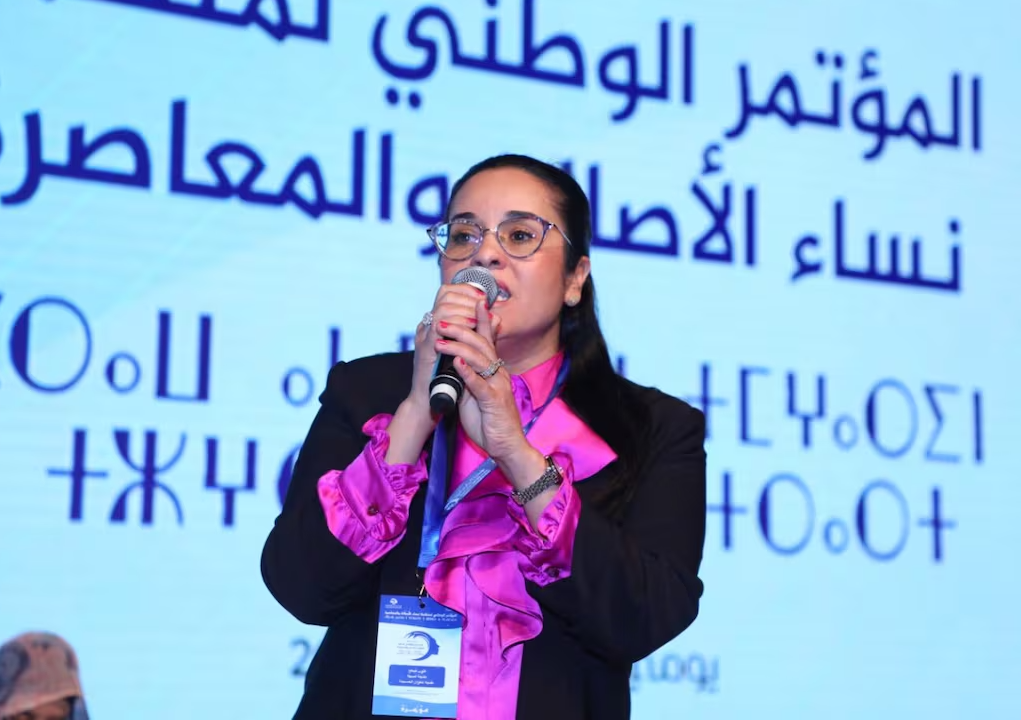
The National Founding Conference of the Women’s Organization of the Authenticity and Modernity Party was held under the slogan: “Comprehensive Empowerment of Women: The Foundation of Development and Equality,” and Ms. Qaloub Faitah was elected president of the organization
February 9–11, 2024
The party held its fifth national conference under the slogan "Renewing the Party to Ensure Continuity" and adopted a collective leadership model for the first time in Morocco
December 2024
Join the International Liberal Organization
September 26–27, 2025
The Second National Conference of the Youth Organization of the Authenticity and Modernity Party was held under the slogan: "Youth Leads, Hope Returns," and Mr. Salah al-Din Abqari was elected president of the organization